Case Study · No. 02
TapLinkConnect
Started as an experiment embedding vCard data into a QR code. Grew into a full CRM platform with AI, webhooks, and a profile that colors itself.
The situation
There was no business plan at the start, just a question: could a QR code hold a real vCard, one that saves straight into someone's phone contacts the moment they scan it, instead of just opening a link? That experiment worked, and it became the seed for an actual product. A physical business card goes out of date the moment a phone number changes, gets lost, and gives no signal about who actually did anything with it after you handed it over.
What I built
NFC and QR-enabled digital business cards, sold across three tiers, each unlocking a different set of features rather than just a price difference. On top of the cards themselves sits a real CRM: a Card Manager for the business side, an Organizations system so institutions can issue cards to their own members under their own branding, and a Team Portal where org admins manage staff, leads, and CRM stages directly.
Every card holder gets their own dashboard, and it's a real one, not a single settings page. A profile completeness meter tracks eleven real fields (name, title, company, contact details, bio, photo, socials) and nudges toward finishing it. A viewers panel shows who's actually looked at your profile, paginated, backed by its own database table. There's an auto-generated email signature pulled straight from the card's own data, a referral program with real conversion, earnings, and payout tracking, and Connections, the contact list that AI-scanned business cards get saved into.
Two AI features sit on top of that. An AI chatbot answers visitor questions, and a business card scanner, a Standard and Pro tier feature, reads a photographed business card and offers to save it straight into Connections.
Behind the scenes, orders flow into a real print pipeline: card customizations get composited into a print-ready PDF at 300 DPI with proper bleed, sized to the actual CR80 card standard, the same physical dimensions as a real credit card.
Real decisions
The profile's colors pick themselves. Most digital-card competitors just hand someone a color picker and let them choose their own wallpaper and accent color, but color harmony isn't something most people actually know how to judge. So the wallpaper upload does the work instead: a dominant color gets extracted by downscaling the image and averaging its pixels, deliberately skipping near-white and near-black ones since those are usually background or shadow, not the subject. A separate accent color gets derived by converting every pixel to hue, saturation, and lightness, weighting each one by how saturated it is so vibrant, colorful pixels count more than muted ones, then averaging the hue correctly as a circular value using sine and cosine, not a naive average that breaks where the color wheel wraps around from 360 degrees back to zero. The result is a profile that always looks intentionally designed, without ever asking the user to understand color theory to get there.
The AI chatbot is locked to what it actually knows. Its system prompt explicitly instructs it to answer only from the Help Center knowledge base, and to say it isn't sure and point to support rather than guess when something isn't covered. For a support bot, a confident wrong answer about pricing or a feature that doesn't exist is worse than admitting it doesn't know.
The scanner is a paid-tier feature, not a free hook. Reading a business card and offering to save it to Connections only unlocks on Standard and Pro cards, a real reason to upgrade, not just a checkbox on a pricing table.
CRM integrations went generic instead of building each one by hand. Rather than building bespoke OAuth against Salesforce, HubSpot, Zoho, Zapier, and Make one at a time, organizations get a signed webhook that fires on real events, dispatched asynchronously through WP-Cron so a slow external system never holds up the actual request.
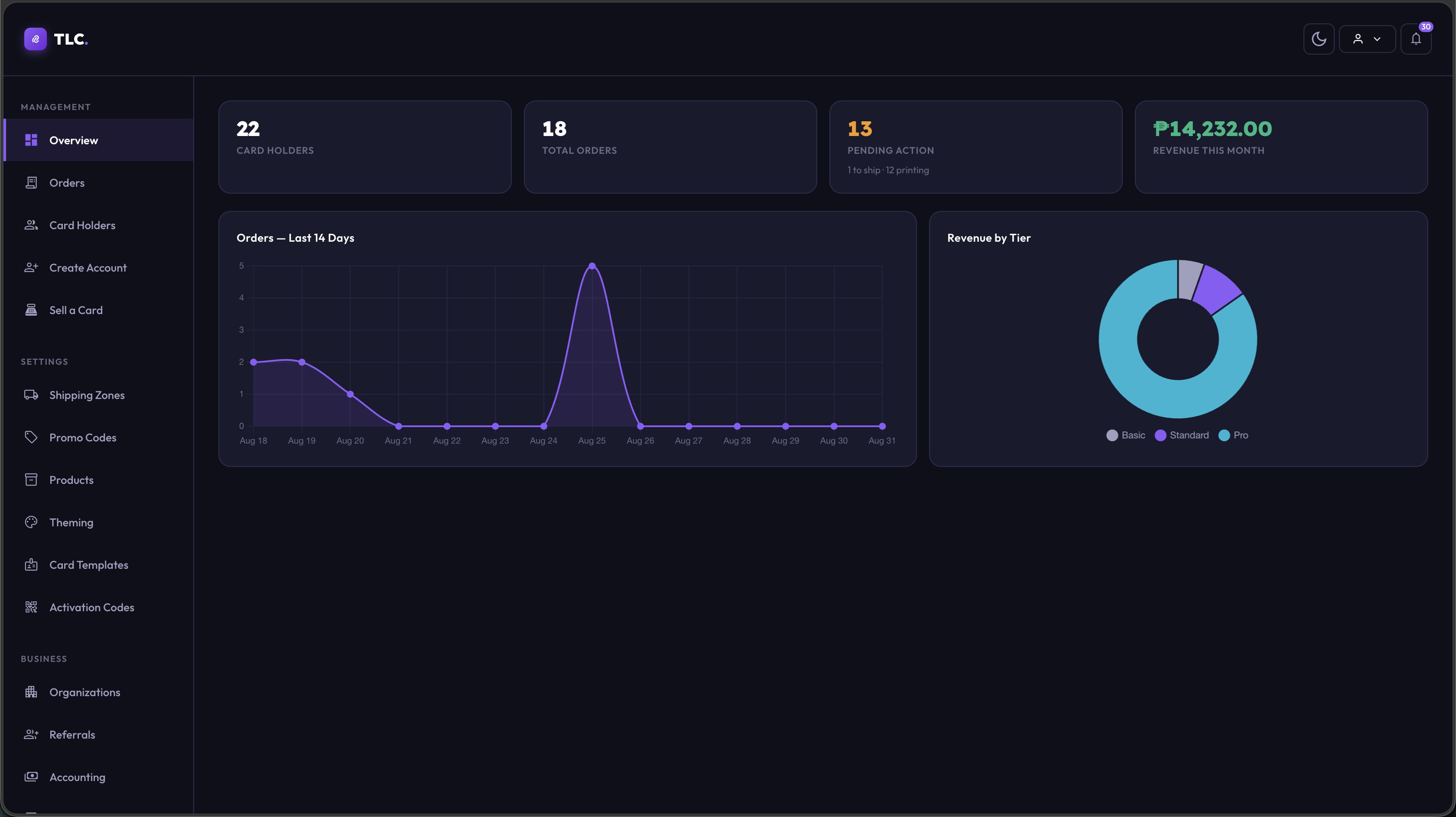
The Card Manager: card holders, orders, pending actions, and revenue by tier, at a glance.
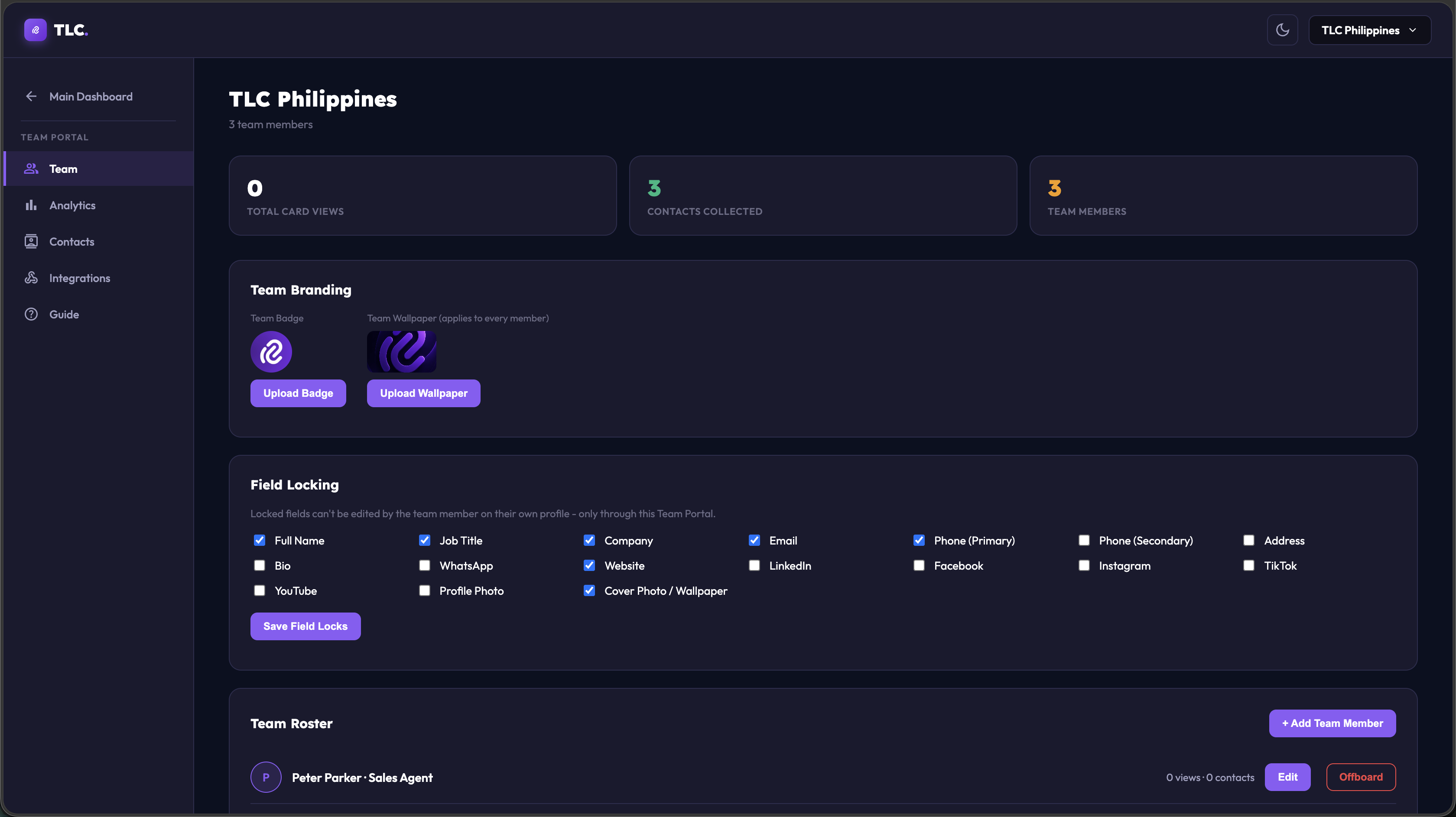
Organizations: real badge-issuer and employer accounts, each managing their own members.
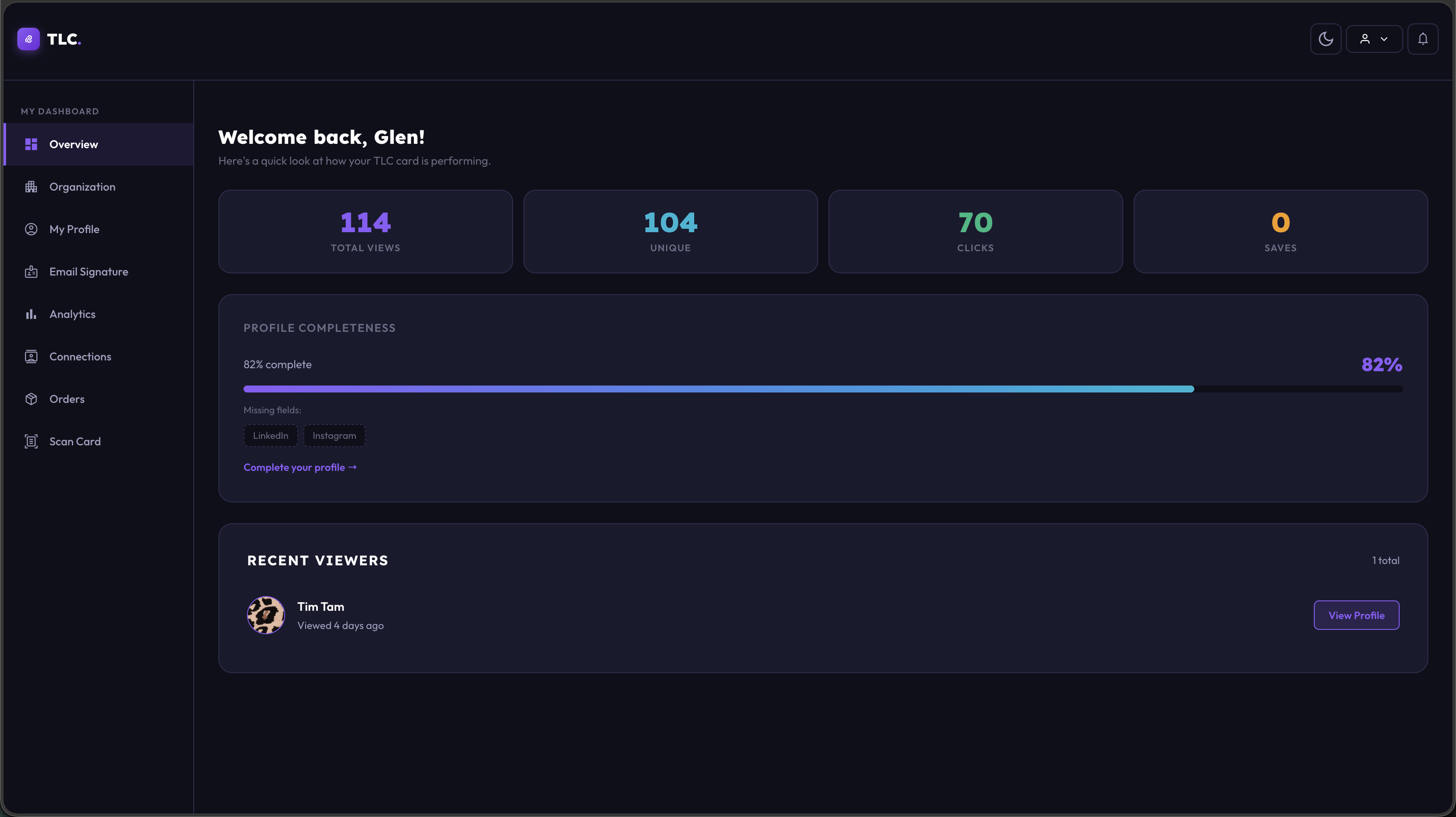
The card holder's own dashboard: profile completeness, viewers, referrals, and a signature, all in one place.
The outcome
What started as an afternoon spent figuring out how to embed a vCard into a QR code is now a real platform: real organizations issuing real cards, a profile that colors itself intelligently from whatever photo someone uploads, an AI scanner that saves a stranger's business card straight to Connections, a CRM with webhooks into whatever system an org already runs on, and orders that end in an actual print-ready file, not just a database row.
Tech stack
Need something like this built?
Tell me what your operation actually does all day, and I'll tell you honestly what's worth building. No jargon, no "let's circle back."